Lessons learned from my bachelor thesis

Particle-in-cell simulations of parametric plasma waves near the quarter-critical density, IBPT, KIT (2026). What I would do the same way, and what I would do differently next time.

1. Before any campaign: question, measure, estimates
  • Define the question and the exact quantity that answers it before choosing any parameters.
  • Reduce the problem to its dimensionless groups, so I never vary two parameters that only enter together.
  • Use quick physics estimates (thresholds, cutoffs, growth times, scale lengths) to decide where to sample, and concentrate the samples where the physics changes.
2. Pilot runs and convergence first
  • Run a small pilot set and push it through the complete analysis before launching the campaign. Missing diagnostics show up here, not after months of computing.
  • Converge the quantity I will actually measure, not "the simulation". One run can be converged for one measure and dominated by noise for another.
  • Test convergence at the corners of the parameter space, where the signal is weakest, and in particle number, cell size, time step and box size.
  • Controls must use exactly the geometry of the campaign. A single "harmless" difference can mislead the whole interpretation.
  • Build repeated configurations with independent random seeds into the design from the start, so error bars come for free.
3. Bookkeeping
  • One project under version control: analysis code, figure scripts, thesis source and result files.
  • One script per figure, named after the figure. Notebooks are for exploring, never for final figures.
  • Numbers in the text come from the analysis, written to result files and imported as macros, not typed by hand.
  • A run registry with one row per simulation: path, parameters, particle number, seed, geometry and purpose.
  • A dated decision log: every analysis choice and every retraction, with one line of reasoning.
  • Shared parameters (masks, bands, thresholds, paths) live in one configuration file used by every script.
4. Interpreting results
  • Distrust a result until it is checked, especially when it looks clean.
  • Quantify how reliable each measure is, and let that decide which trends I claim.
  • Separate what the data show from what they cannot separate, and say so explicitly.
  • Be willing to retract my own conclusions when new evidence contradicts them. Several of my best results came from correcting my earlier ones.
  • Reproduce a published benchmark before trusting a new diagnostic.
5. Working with slow feedback
  • When each round of simulations takes weeks, keep two or three lines of work running in parallel, so I am never fully blocked.
  • Ask early for access to the full data, not only to processed summaries.
  • Talk to people outside my group. Conferences and summer schools gave me some of my best ideas.
  • Write a short weekly status note: what is done, what is running, what is open.
6. Writing
  • Every paragraph needs a guiding first sentence and a clear takeaway. A dense text full of correct numbers is still hard to read.
  • State the central claim of the work in one sentence, and make every section serve it.
  • State limitations openly. They are a sign of care, not of weakness.
  • Know when to stop. Each further round of revisions carries the risk of new inconsistencies.

The short version: plan the measurement before the simulation, converge what you measure, keep track of everything, and trust a result only after trying hard to break it.

Orbit Lab

Live satellite catalog, validated SGP4 propagation, and a simulated model of SES's meoSphere constellation. Click the view to use the keyboard controls.


ICF/HEDP Research

On the long term, contributing to European Inertial Confinement Fusion and High Energy Density Physics are my highest priority.

Research Topics

Here is an non-exhaustive list of the research topics I focus on!
Fluid Mechanics

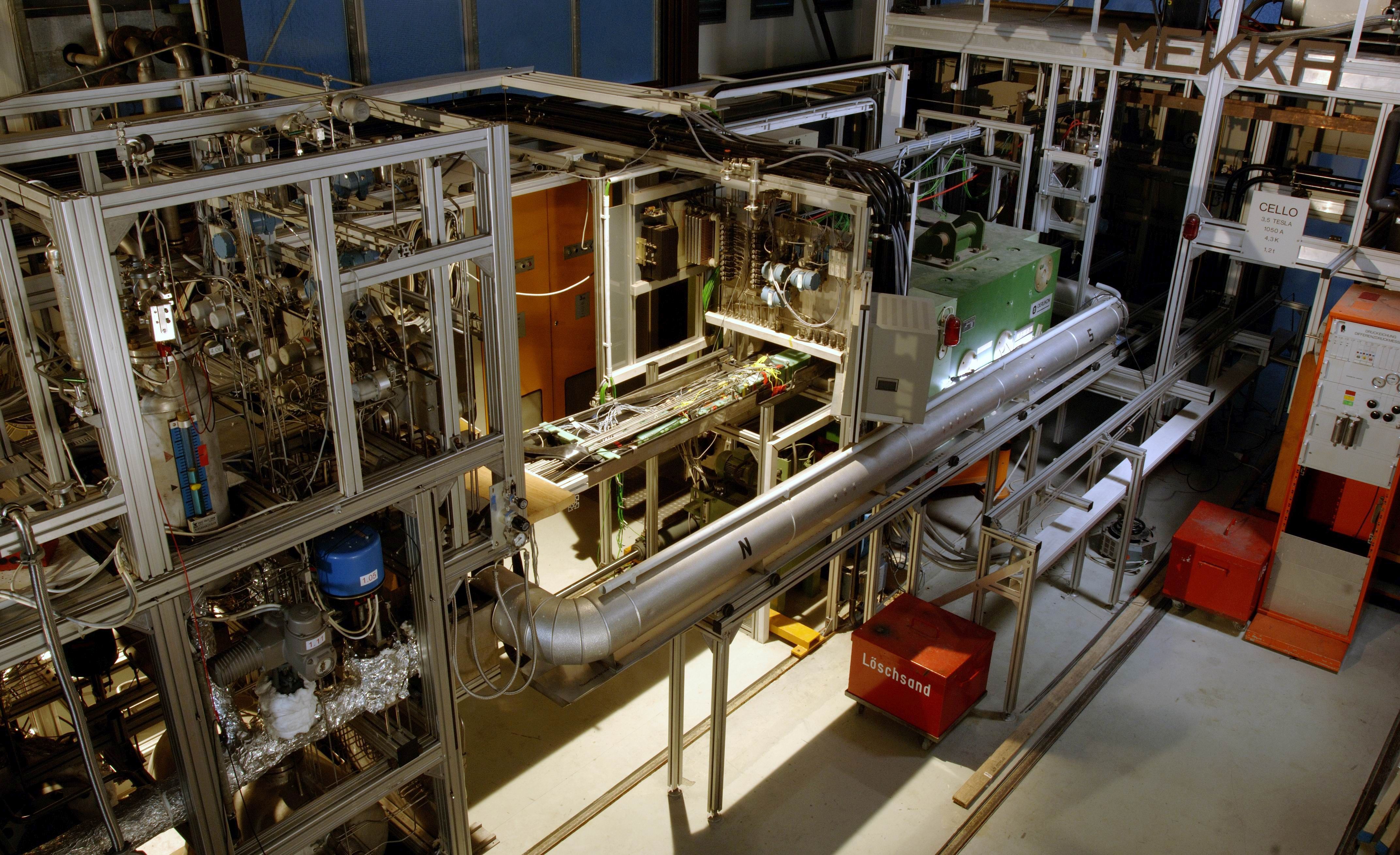
Interested in Plasma MHD for Fusion Reactors and Relativistic MHD in Space.

Cosmology

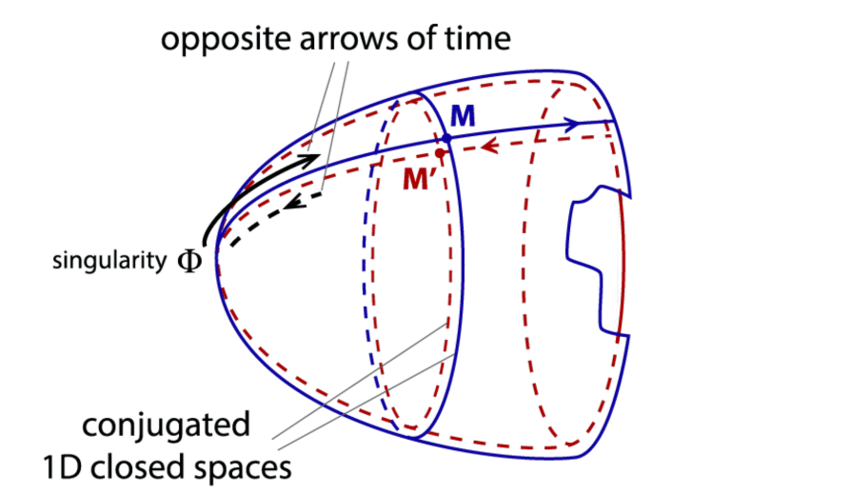
Interested in cosmological models that present a radical paradigm shift on topological and geometric aspects.